Mold Removal in Renton, WA
Renton was platted in 1875 on coal and timber at the point where the Cedar River reaches the south end of Lake Washington, and it has grown in rings ever since: a downtown grid from the first decades of the 1900s, Boeing-era plats from the 1940s in North Renton and the Highlands, split-levels and ramblers from the 1960s and 1970s on Talbot Hill, Tiffany Park, and Cascade, and two-story subdivisions from the 1990s and 2000s on Benson Hill, the East Plateau, and Liberty Ridge. The city passed 100,000 residents in 2024.
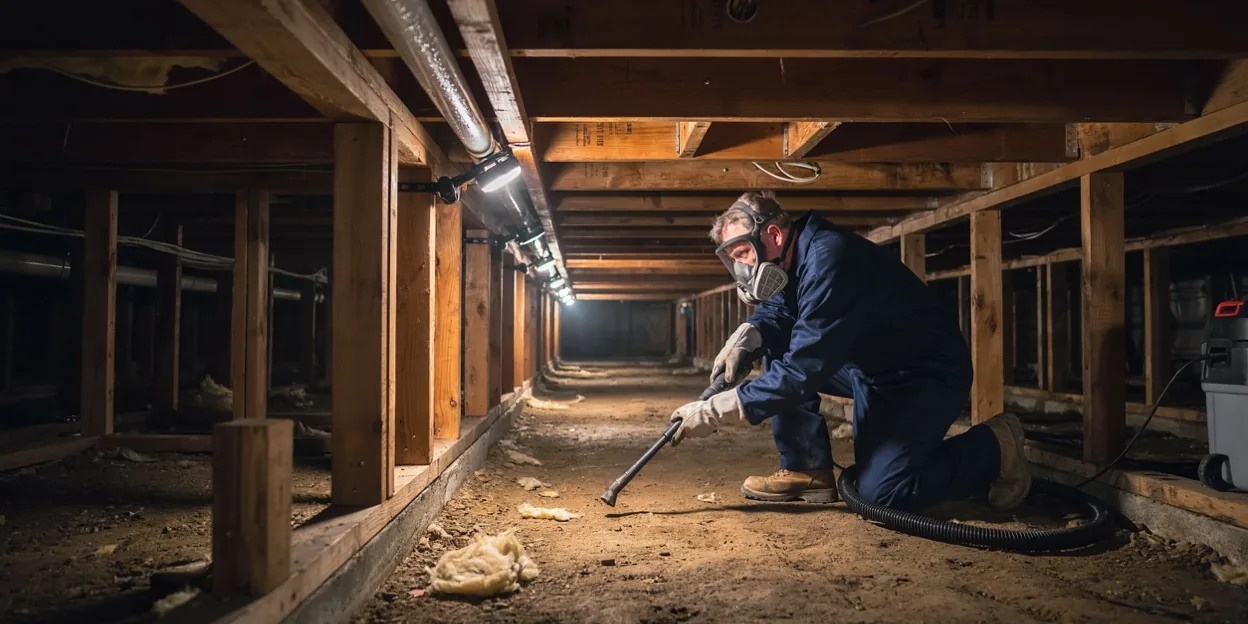
Almost all of that housing before 2000 sits on a vented crawl space, and all of it sits under a sky that drops about fifty inches of rain a year, mostly between October and May. Mold in Renton is less often a burst-pipe story than a crawl space that never dries, a bath fan that ends in the attic, or a window that sweats every morning for seven months.
When you call this number from a Renton address, you reach one independent local mold provider who works the whole city. That provider opens the crawl space, meters the house, and writes the scope; our part ends when the call connects.
What Renton houses send to the phone line most often
Growth on a closet wall or a window sill in a Highlands rambler is mold removal. A dark roof deck found by a buyer's inspector in a 1970s two-story is attic mold remediation. A crawl space that flooded in the December 2025 storm and a house that smells of it in every room is whole-home mold remediation.
A football practice field and a 150-year-old coal town
Renton is where the Seattle Seahawks practice; the team's Virginia Mason Athletic Center sits on the Lake Washington shore north of downtown, and the Seahawks have trained there since the late 2000s. For the long version of how a coal camp on the Black River became the home of the 737, HistoryLink's Renton history covers the 1911 Landsburg dam flood, the 1916 lake lowering that dried the Black River, and the wartime boom that quadrupled the town.
Call (425) 584-6572 from anywhere in Renton and describe where the house is wet. We put you through to a local mold provider who covers the whole city.
Services Available in Renton
Mold Removal
Growth on drywall, a closet wall, or a window sill after nine wet months: room sealed, wet board cut to the meter line, framing HEPA-cleaned and dried.
Black Mold Removal
A dark patch handled by how far the moisture reached, not its color: containment, porous material out, hard surfaces cleaned, source fixed before closing.
Whole-Home Mold Remediation
A crawl space, a roof leak, and a bathroom all feeding growth in one house, mapped room by room and cleared in zones as one project.
HVAC Mold Cleaning
Furnace cabinet, coil, and the ducts that run through a damp crawl space cleaned when the heat comes on in October and the house smells wrong.
Bathroom Mold Removal
Spots on a bathroom ceiling with a weak fan, growth behind a vanity or under a shower pan, removed with the leak or the venting fixed first.
Attic Mold Remediation
Dark sheathing under a roof that drips condensation all winter, cleaned and treated once the bath fans vent outside and the soffits breathe.
Mold Odor Removal
A musty smell that climbs out of the crawl space every November, traced to the wet joists or insulation under the floor, then removed and treated.
Mold Damage Repair
Drywall, trim, subfloor, and insulation put back after removal, once the framing reads dry and whatever let the water in is repaired.