Bathroom Mold Removal in Renton, WA
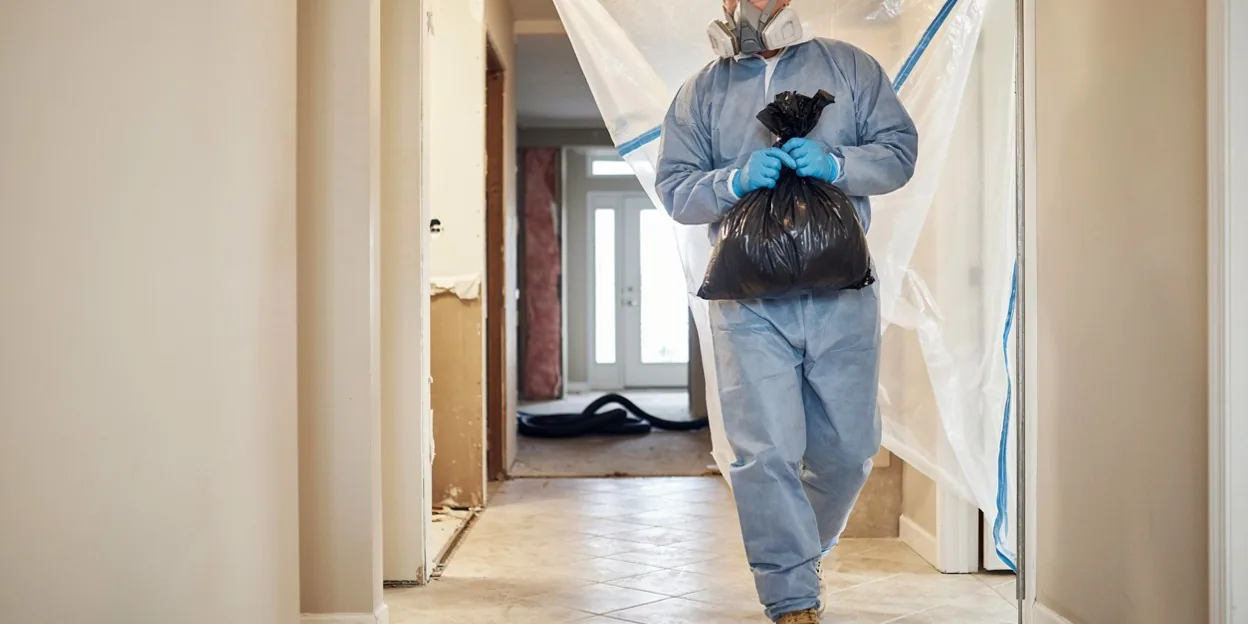
You repainted the hall bathroom ceiling two summers ago with the paint that is supposed to stop this. By January the gray dots were back over the shower, and this winter they have spread to the corner above the door. The fan runs, but a square of toilet paper held up to it barely flutters. The house is a 1988 two-story in Fairwood and the bathroom sits in the middle of the floor plan with no window. This site connects you by phone with an independent local provider who does bathroom mold removal in Renton and across King County.
Where does the fan duct actually go?
The provider's first question is about the fan, not the ceiling. They pull the grille, check whether the duct is connected, and then go into the attic to see where it ends. In a lot of Renton houses the answer is a flex duct lying on the insulation three feet from the fan, or a duct that runs to the soffit and stops short of it, so every shower has been venting into the attic since the house was built. That one finding explains the ceiling and, often, the dark plywood above it.
Then the room gets metered: the ceiling, the wall behind the toilet, the wall the shower valve is in, and the floor around the tub. Growth on the ceiling is condensation. A soft wall behind the toilet is a supply-line or a flange leak, and that gets traced before anything is opened.
Shower with the door open and the fan running for twenty minutes after
Until the crew arrives, run the fan during every shower and for twenty minutes after, and leave the bathroom door open so the steam has somewhere to go. Wipe the ceiling dots with detergent and water if they are only on paint; do not scrape or sand them. If the drywall behind the toilet is soft, stop using that bathroom and check under the vanity and around the toilet base for a slow drip.
Photograph the ceiling, the fan grille, and anything that looks wet. If you can get into the attic safely, a photo of where the fan duct ends is the single most useful thing you can hand the crew.
Ceiling and soft wall out, fan ducted to daylight, framing dried
Inside plastic, with the hall sealed and a HEPA scrubber running, the ceiling drywall comes down to the joists where the growth has gone through the paint into the board. A soft wall behind the toilet is opened to the meter line and the insulation behind it is bagged. The joists, the top plates, and the subfloor around a leaking flange are cleaned and metered. Dehumidifiers run until they read dry.
Before any drywall goes back, the fan duct is run to a roof or wall cap with a proper damper, and a fan too small for the room is replaced. Dark roof plywood found above the bathroom is attic mold remediation. A musty smell that stays after the bathroom is done usually means the problem is below the floor, which is mold odor removal. New ceiling, wall, tile backer, and trim are mold damage repair.
Interior bathrooms, cold attics, and ninety-percent mornings
From October through May the air outside a Renton bathroom sits near ninety percent humidity most mornings, so steam from a shower has nowhere to go even with a window cracked. Bathrooms in the 1980s and 1990s plats on Fairwood, Benson Hill, and the East Plateau tend to be interior rooms with a fan ducted into the attic, and the 1940s and 1950s Highlands houses often have no fan at all. Either way, warm wet air meets a ceiling cooled by an attic that hovers near forty degrees, and it condenses every single day.
Washington has no mold license, so the provider represents its own training. Replacing drywall, running a new fan duct, and fixing a toilet flange are contractor, mechanical, and plumbing work under a Department of Labor and Industries registration, and the ducting and plumbing usually need a permit through the City of Renton, or King County for Fairwood and the other unincorporated areas. Policies generally treat a sudden supply-line break differently from years of condensation, so tell your adjuster which one the crew found.
Calling about a bathroom ceiling that will not stay clean in Renton
Have the address, whether the bathroom has a window, and whether the fan vents outside, into the attic, or you do not know. Say whether the drywall anywhere is soft, whether the house is on a crawl space, and when you last repainted. Call (425) 584-6572.