Mold Removal in Burien, WA
Burien sits on the bluffs above Puget Sound west of SeaTac, a city since 1993 but a neighborhood since the 1920s, when Seattle families built summer cottages above the beach at Three Tree Point and Seahurst. The housing is a mix of those cottages, long since winterized, 1940s and 1950s ramblers across the plateau, and 1960s and 1970s view houses stepping down the slopes toward the water.
Marine air is the whole story here. The bluff houses sit in fog and salt spray for much of the winter, their west walls take the wind-driven rain straight on, and a crawl space on a slope above the Sound drains toward the house as often as away from it. A cottage that started life as a three-season place still has a floor built a foot off the dirt and a bathroom added in a closet with no fan.
Call this line from Burien and you reach one independent local mold provider who works the bluffs and the plateau. The connection is our part; the scope and the work are the provider's.
Burien mold removal in bluff cottages and plateau ramblers
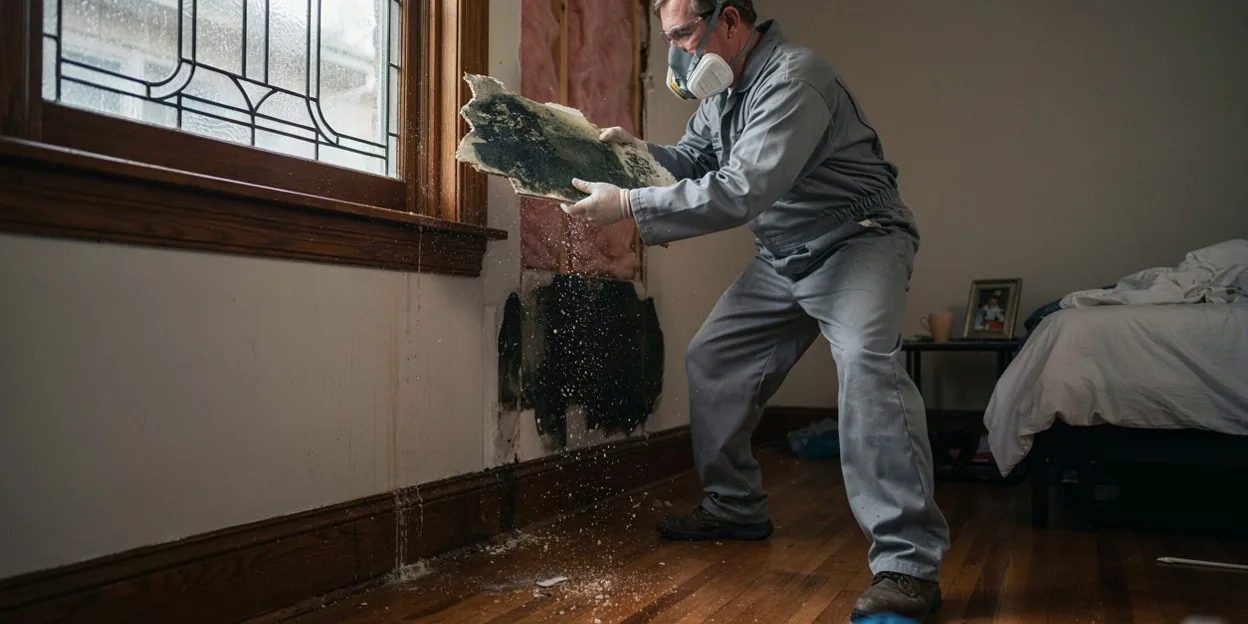
A west wall that stays wet behind the siding in a 1960s view house and a dark patch low on the drywall inside is black mold removal. A converted summer cottage that smells like the beach at low tide every winter is mold odor removal. A crawl space, a bathroom, and a bedroom all wet in the same old house is whole-home mold remediation.
A city hall for the plateau and a beach at the bottom of the hill
Rebuild permits after removal go through the City of Burien, and the provider files them. Seahurst Park, the city's forested beach park below the bluff, is where most residents go to look at the water they can smell from their crawl spaces.
Call (425) 584-6572 and describe where the house is wet. We put you through to a local mold provider serving Burien.
Services Available in Burien
Mold Removal
Growth on drywall, a closet wall, or a window sill after nine wet months: room sealed, wet board cut to the meter line, framing HEPA-cleaned and dried.
Black Mold Removal
A dark patch handled by how far the moisture reached, not its color: containment, porous material out, hard surfaces cleaned, source fixed before closing.
Whole-Home Mold Remediation
A crawl space, a roof leak, and a bathroom all feeding growth in one house, mapped room by room and cleared in zones as one project.
HVAC Mold Cleaning
Furnace cabinet, coil, and the ducts that run through a damp crawl space cleaned when the heat comes on in October and the house smells wrong.
Bathroom Mold Removal
Spots on a bathroom ceiling with a weak fan, growth behind a vanity or under a shower pan, removed with the leak or the venting fixed first.
Attic Mold Remediation
Dark sheathing under a roof that drips condensation all winter, cleaned and treated once the bath fans vent outside and the soffits breathe.
Mold Odor Removal
A musty smell that climbs out of the crawl space every November, traced to the wet joists or insulation under the floor, then removed and treated.
Mold Damage Repair
Drywall, trim, subfloor, and insulation put back after removal, once the framing reads dry and whatever let the water in is repaired.