Mold Removal in Black Diamond, WA
Black Diamond is a coal town at the edge of the Cascade foothills, laid out in the 1880s when the Black Diamond Mining Company found the seams it was looking for and the first train arrived in 1884 to a camp of roughly 3,000 people. The mines closed decades ago, and today the town is a mix of 1900s company houses near the old depot, 1960s and 1970s homes along the lakes, and the Ten Trails development that started adding thousands of new houses on the plateau in the late 2010s.
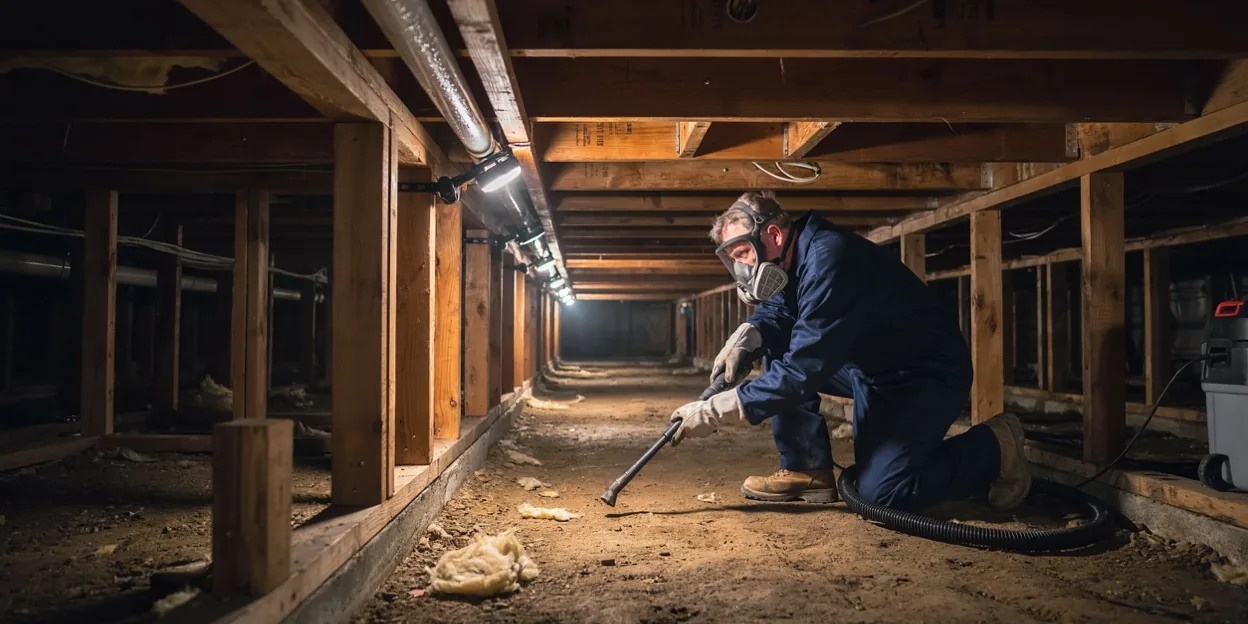
Three generations of houses, three sets of mold problems. The company houses sit a foot off wet ground with plaster walls and no bath fans. The 1970s lake houses have crawl spaces dug into clay and the original windows. The new houses are tight and well insulated and will grow attic mold the first winter a bath fan duct comes loose in the insulation.
Black Diamond homeowners who call this number reach one independent local mold provider who works the foothills. We set up the call and step aside.
Black Diamond mold removal from the company houses to Ten Trails
A soft sill and a stained plaster wall in a 1910 miner's house is mold removal. Open joists and a bare ceiling waiting for new drywall after the removal crew leaves is mold damage repair. A dark north slope in a two-year-old attic is attic mold remediation.
A museum in the depot that remembers thirty languages
The Black Diamond Historical Society opened its museum in the restored railroad depot on Railroad Avenue in 1982 and keeps the record of a mining camp where roughly thirty languages were spoken by 1884. Rebuild permits in town go through the city's building desk, and the provider handles that filing.
Call (425) 584-6572 and describe the wall or the ceiling. We put you through to a local mold provider serving Black Diamond.
Services Available in Black Diamond
Mold Removal
Growth on drywall, a closet wall, or a window sill after nine wet months: room sealed, wet board cut to the meter line, framing HEPA-cleaned and dried.
Black Mold Removal
A dark patch handled by how far the moisture reached, not its color: containment, porous material out, hard surfaces cleaned, source fixed before closing.
Whole-Home Mold Remediation
A crawl space, a roof leak, and a bathroom all feeding growth in one house, mapped room by room and cleared in zones as one project.
HVAC Mold Cleaning
Furnace cabinet, coil, and the ducts that run through a damp crawl space cleaned when the heat comes on in October and the house smells wrong.
Bathroom Mold Removal
Spots on a bathroom ceiling with a weak fan, growth behind a vanity or under a shower pan, removed with the leak or the venting fixed first.
Attic Mold Remediation
Dark sheathing under a roof that drips condensation all winter, cleaned and treated once the bath fans vent outside and the soffits breathe.
Mold Odor Removal
A musty smell that climbs out of the crawl space every November, traced to the wet joists or insulation under the floor, then removed and treated.
Mold Damage Repair
Drywall, trim, subfloor, and insulation put back after removal, once the framing reads dry and whatever let the water in is repaired.